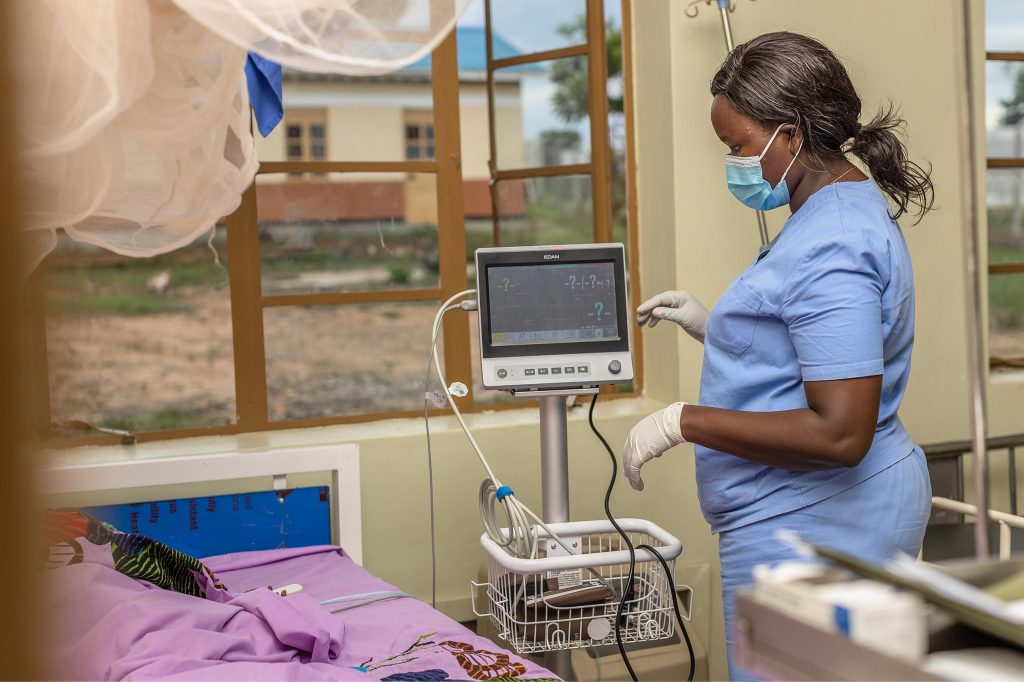
The progress of the UGIFT Programme is satisfactory because we are not so behind. In terms ofinfrastructure such as building of schools, upgrading the health centres and water facilities,we are doing well too.We are also collaborating with other government agencies, something which has helped us to boost theprogramme. We are working as a team, especially in coordinating infrastructure development such asproviding water and solar panels and electrifi cation of schools and hospitals.
We also have the hybrid procurement system which organizes meetings for bids. This has helped us tomanage checks and balances. This is why we have more than 70 schools that are properly constructed out of the 117. There are also more upgraded health facilities than we had planned. This is a result-oriented programme. If you have constructed a school, provided laboratory equipment,recruited teaching staff and you have students; it means you have achieved the result of having anoperational school.
The same goes for a health centre – if you have upgraded from health centre II to III; you have staff;equipped the facilities and the patients are coming for services, then there is anoperational structure. Through this programme, we have given local governments more money for operations from the over$500m, for sectors such as education, health, water and agriculture.The programme has achieved equality across regions because every sub-county that did nothave a school or health centre III, has been catered for.
We are going to have a mid-term review.My appeal is that some stakeholders plan for activities which are achievable under the foursectors (education, health, water and agriculture), so that we can get our disbursements from the WorldBank. Having different ministries, departments and agencies working together as a unit ofgovernment has been a big achievement under the programme.
Every month, we hold a fiscal decentralization technical committee meeting; every threemonths, we have a steering committee meeting which comprises of the permanent secretaries andexecutive directors of the agencies we are dealing with and, apart from the COVID-19time, we used to have an oversight committee meeting which is headed by the ministers, everysix months.
During the meetings, we evaluate our strengths and weaknesses. Also, contrary to other plans of government, the political input in UGIFT was involved and engagingfrom the beginning of the project implementations under the programme.They have been part of the planning and implementation of the programme.
Next year, we want to have an integrated water system under the Ministry of Water and Environment to cover all water sources.
The following year, we shall extend it to agriculture and, finally, we shall get to the Ministry of Health. Among the challenges is the skyrocketing prices of commodities which has affected themoney which was already allocated in the budget.
For instance, a school which was previously consuming sh2.1b in construction works, has gone up to sh2.5b.In such instances, we have to look for more money outside of the programme fund or reduce the numberof schools to be constructed.
On the part of the small-scale irrigation, the private sector is failing to raise the money for co-financing and so the project is not running as we had expected.