Water & Environment
Ensuring Clean Water & Environmental Resilience
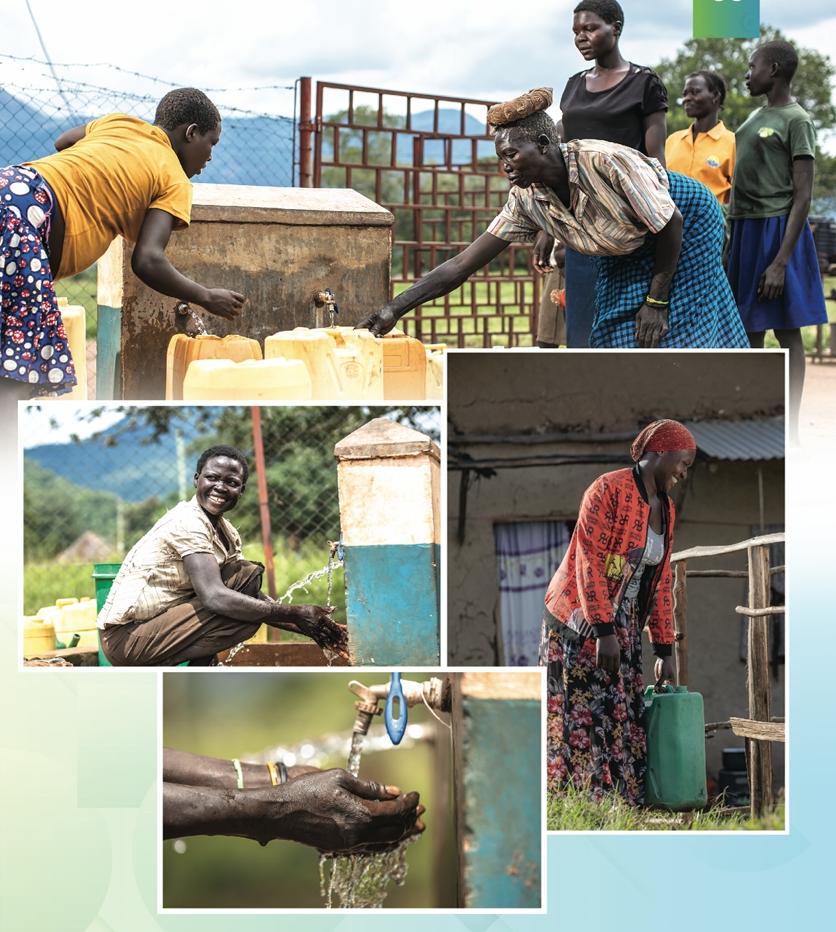
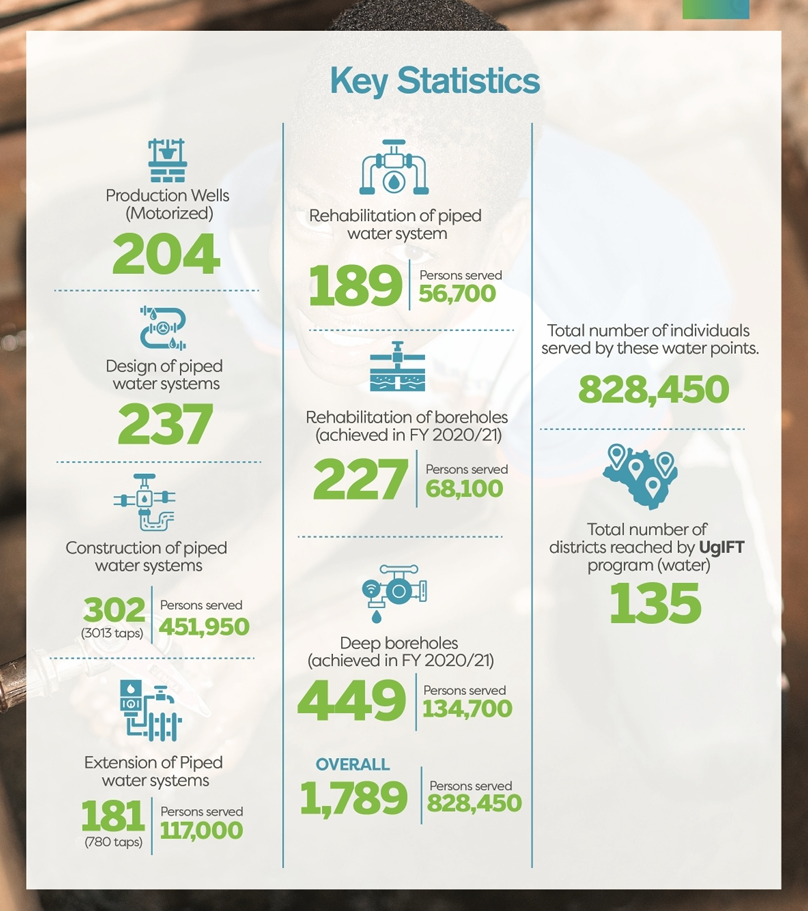
UgIFT strengthens local governments by funding safe water access and environmental stewardship, delivering new or repaired water infrastructure to benefit 750,000 Ugandans, while supporting watershed protection and anti‑deforestation efforts in underserved areas
UgIFT’s model ensures lasting impact by:
- Building on broad institutional structures, not parallel systems.
- Tying technical monitoring tools to funding for accountability.
- Promoting local ownership, districts take the lead in managing and sustaining water infrastructure and ecosystems.
An estimated 750,000 people have gained access to clean, reliable water through these investments
1. Safe Water Infrastructure
a). Deep boreholes drilled and repaired to deliver fresh drinking water.
b). Protected springs upgraded to safeguard community water sources.
c). Rainwater harvesting tanks installed at schools and health centers, ensuring year-round water even in dry seasons.
2. Stronger Local Institutions
Water sector funding is built into equitable fiscal transfers, no separate donor systems.
Districts use national MIS tools (e.g., Water Atlas) to monitor asset performance and plan maintenance
3. Environmental Stewardship
Districts receive grants to expand environmental functions such as watershed management and reforestation.
Collaboration with MWE and NEMA strengthens local conservation capacities
Why It Matters
Health: Reduced incidence of waterborne diseases and improved sanitation in schools and clinics.
Education & Equity: Greater access to water supports attendance and gender equity in schools.
Economic Growth & Climate Resilience: Clean water empowers communities to thrive despite environmental changes.
Ecosystem Protection: Funds support crucial efforts to preserve forests and watersheds.